Buzz Cut Guards Sizes: Complete Guide to Lengths & Choosing the Right Guard
Choosing the right buzz cut guards can be confusing, especially when your barber asks, “What number do you want?” Each guard size leaves a different hair length, affecting how much scalp is visible and how your haircut looks. This guide explains buzz cut guard sizes #0 through #4, including their lengths in inches and millimeters, appearance, and who they suit best. You’ll also find an extended guard-size chart to help you choose the right length before visiting your barber.
Quick Answer
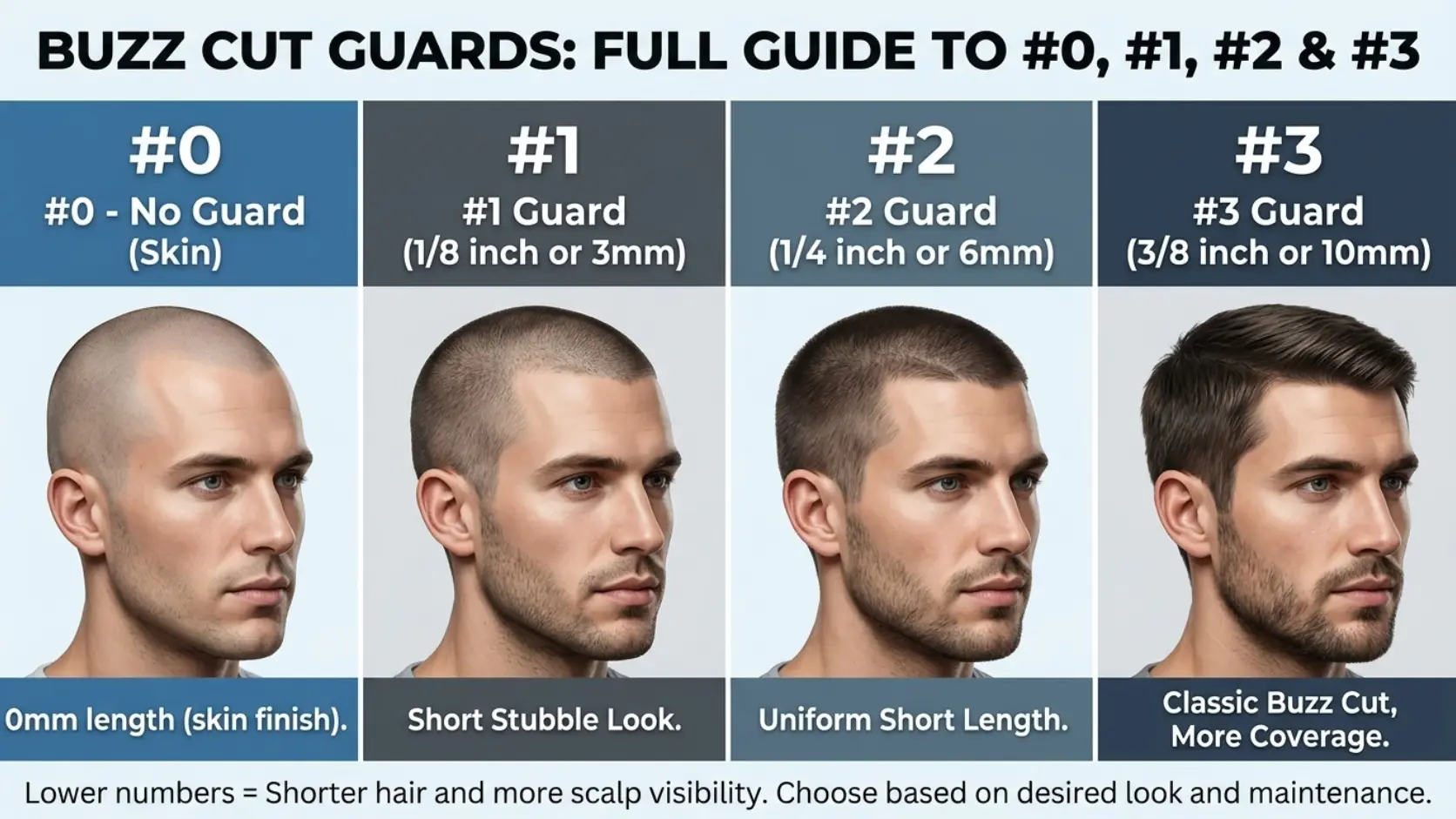
Buzz cut guards control how much hair remains after trimming. A #1 guard leaves approximately ⅛ inch (3 mm), #2 leaves ¼ inch (6 mm), #3 leaves ⅜ inch (10 mm), and #4 leaves ½ inch (13 mm). A #0 cut is much closer to the scalp, with the exact length depending on the clipper. For first-time buzz cuts, #3 or #4 offers more coverage, while #0 or #1 creates a very short look.
Which Buzz Cut Guard Should You Choose?
The best buzz cut guard depends on how short you want your hair, how much scalp coverage you prefer, and your natural hair texture. For first-time buzz cuts, a #3 or #4 guard is often a comfortable starting point because it leaves more hair and allows you to go shorter later.
If you already prefer very short hair, a #1 or #2 guard may be more suitable.
| Guard Size | Hair Length | Appearance | Best For |
|---|---|---|---|
| #1 Guard | ⅛ inch (3 mm) | Very short, with visible scalp | Men who prefer a closely cropped haircut |
| #2 Guard | ¼ inch (6 mm) | Short, even coverage | Classic buzz cut styles |
| #3 Guard | ⅜ inch (10 mm) | Fuller appearance with more coverage | First-time buzz cuts |
| #4 Guard | ½ inch (13 mm) | Softer look with more visible texture | Men who prefer a longer buzz cut |
Our recommendation: If you’re unsure which guard to choose, start with a #3 or #4. You can always cut your hair shorter, but you cannot immediately restore length once it has been removed. Hair density, texture, and growth patterns can also affect how the same guard looks on different people.
Buzz Cut Guard Sizes Chart (0 to 16)
| Guard | Inches | Millimeters | What It Looks Like |
| 0(no guard) | Varies | Varies | Almost bald, skin shows through. Used for skin fades. |
| 1 | 1/8″ | 3 mm | Very short stubble, scalp clearly visible. |
| 2 | 1/4″ | 6 mm | Classic short buzz, clean and sharp. |
| 3 | 3/8″ | 10 mm | Short, with a little more coverage. A popular first buzz cut. |
| 4 | 1/2″ | 13 mm | Short but soft, with some texture showing. |
| 5 | 5/8″ | 16 mm | Natural texture starts to show. |
| 6 | 3/4″ | 19 mm | Fuller buzz, close to a short crew cut. |
| 7 | 7/8″ | 22 mm | Noticeably fuller, holds waves and curls. |
| 8 | 1″ | 25 mm | Soft, natural look. The longest guard in many standard sets. |
| 9 | 1 1/8″ | 29 mm | Longer length; #9 attachments are not standard in most clipper sets. |
| 10 | 1 1/4″ | 32 mm | Long buzz that you can lightly style. |
| 12 | 1 1/2″ | 38 mm | Long buzz, or textured crop. |
| 14 |
|
| Extra-long haircut length; guard availability and measurements vary by manufacturer. |
| 16 | 2″ | 50 mm | Extra-long length; availability and sizing vary by manufacturer. |
Important note about longer clipper guards: Most standard clipper guard sets include sizes up to #8 (1 inch or 25 mm). Some manufacturers offer extended attachments, including #10 (1¼ inches or 32 mm) and #12 (1½ inches or 38 mm). Longer sizes such as #14 and #16 are not universally standardized or included with most clippers. Always check the manufacturer’s specifications and attachment compatibility before purchasing or using an extended guard.
What Are Buzz Cut Guards?
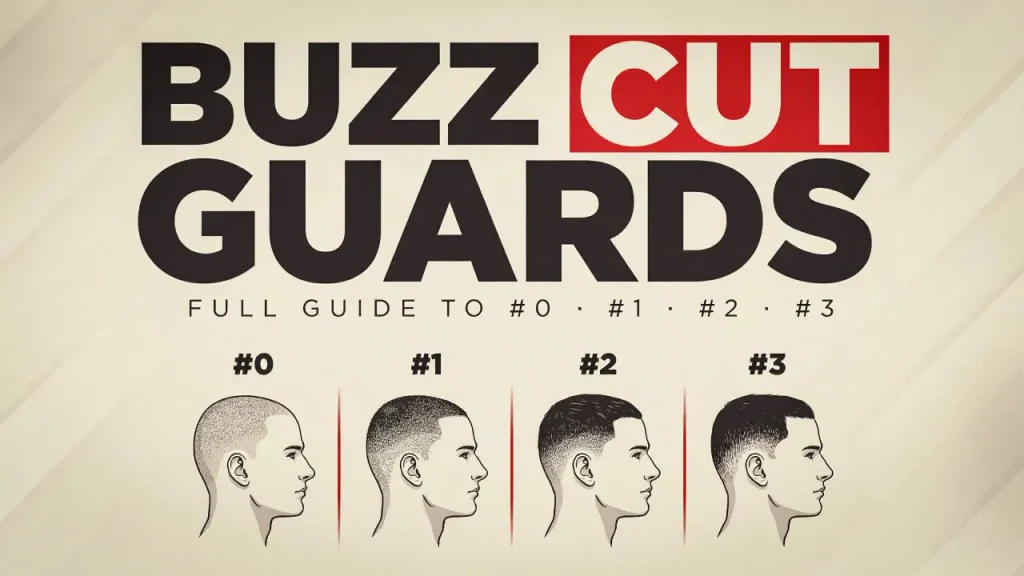
Buzz cut guards are small plastic attachments that clip onto electric hair clippers. Each guard controls how much hair the blade leaves behind. Without a guard, clippers cut hair almost down to the skin. Barbers use these guards to keep every cut even. Buzz Cut Guards also help beginners at home avoid uneven patches or accidental bald spots.
Why Clipper Guard Numbers Matter
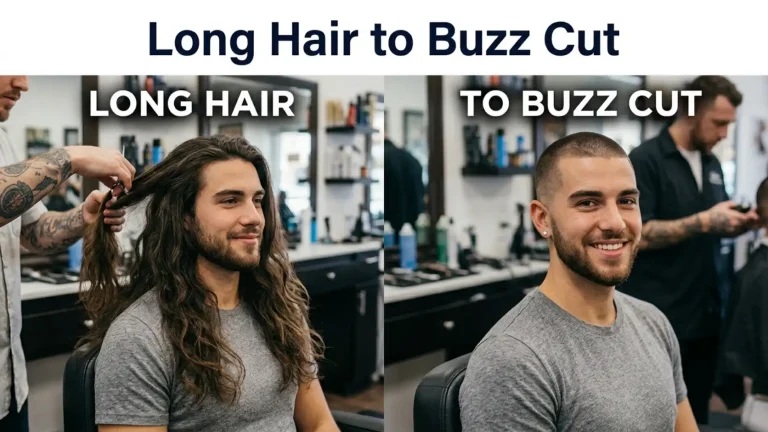
The number on a buzz cut guards tells you exactly how long your hair will be after the cut. This takes the guesswork out of getting a buzz cut. Instead of describing “short” or “really short,” you can simply say a guard number and get the exact length you want. This matters because hair length changes how your whole head looks. A small change in buzz cut guards size can shift your style from a bold shaved look to a soft, textured crop.
Understanding Hair Length Measurements
Most Buzz Cut guards are measured in eighths of an inch. So a #1 guard leaves about one-eighth of an inch of hair. A #2 leaves about a quarter inch, and so on. This simple math helps you picture the result before the clippers even touch your head.
How Barbers Use Guard Numbers
Experienced barbers rarely use just one guard for a whole head. They often blend two or three sizes together. This creates smooth transitions instead of hard, choppy lines. A skilled barber might use a #2 on top and fade down to a #0 near the ears. This blending is part of what makes a buzz cut look professional instead of homemade.
Do All Clipper Brands Use the Same Guard Numbers?
Mostly, but not always. Wahl, Andis and BaByliss PRO number their guards in eighths of an inch, so a #4 leaves about 1/2 inch (13 mm). Oster is the exception, because its numbers don’t always match this system.
Always check the length printed on your guard or in your clipper’s manual. If you follow a chart that uses a different system, your cut can end up shorter or longer than you planned. When in doubt, start with a longer guard and test on the back of your head first.
Buzz Cut Guard Sizes Explained
Each guard size creates a different look. Here is what you need to know about the most common ones.
#0 Guard Buzz Cut
A #0 buzz cut is an extremely short haircut that leaves the hair close to the scalp. The exact cutting length depends on the clipper model, blade type, and lever position. Some barbers use the term “zero guard” to describe cutting without an attachment guard.
This haircut exposes more of the scalp and head shape than longer buzz cuts. If you prefer a closely cropped appearance, a #0 buzz cut may be suitable. However, beginners should confirm the cutting length before starting because different clippers may produce different results..
Who Should Choose a #0 Buzz Cut?
This length works well for men who want a low-maintenance style. It suits people who are starting to lose hair and want a clean, intentional look instead of thinning patches. It also works great in hot climates since there is very little hair to trap heat.
0 Guard vs 1 Guard Buzz Cut: What’s the Difference?
The main difference between a 0 guard and a 1 guard buzz cut is how much hair remains on your scalp. A 0 guard buzz cut creates an almost-shaved appearance, while a #1 guard leaves approximately 1/8 inch (3 mm) of hair, giving the scalp a short, even layer of stubble. The exact length of a #0 cut depends on the clipper and attachment used. If you want a bold, closely cropped haircut, choose a 0 guard. If you prefer slightly more coverage while keeping your hair extremely short, a #1 guard is a better option.
#1 Guard Buzz Cut
A #1 guard leaves a light shadow of hair on the scalp. It is longer than a #0 but still very short. You can still see a hint of hair color and texture. This is one of the most popular buzz cut lengths because it looks neat without feeling too extreme.
Who Should Choose a #1 Buzz Cut?
This length suits people who want a sharp, clean look but are not ready for a fully shaved head. It also works well for thicker hair types that can look heavy at longer guard lengths.
#2 Guard Buzz Cut
A #2 guard leaves noticeably more hair than a #1. You start to see actual texture and slight movement in the hair. This length still counts as a true buzz cut but feels softer. It is a great middle-ground option for first-time buzz cut customers who are nervous about going too short.
Who Should Choose a #2 Buzz Cut?
This works well for people who want short hair but still want to style it slightly with their fingers. It also flatters rounder face shapes by adding a small amount of height on top.
#3 Guard Buzz Cut
A #3 guard buzz cut leaves approximately ⅜ inch (10 mm) of hair, offering more coverage than a #1 or #2 cut while maintaining a short, even appearance. It is a practical choice for men who want a traditional buzz cut without exposing too much scalp. The additional length allows more natural hair texture to remain visible, making it a comfortable starting point for first-time buzz cuts.
Who Should Choose a #3 Buzz Cut?
This length is great for people transitioning from longer hair into short styles. It also suits men with fine or thin hair since the extra length adds a bit more visual fullness.
Longer Buzz Cut Guard Sizes (#4 and Above)
Longer buzz cut guards, starting from #4 (approximately 13 mm), leave more hair on the scalp while maintaining the simplicity of a clipper haircut. These lengths are suitable for men who prefer additional coverage, visible natural texture, or a softer appearance.
A #4 guard creates a short, fuller buzz cut, while #6 and #8 guards leave progressively more length. At higher guard sizes, the haircut may begin to resemble a short crop, depending on hair texture and how the top and sides are shaped.
Longer guards can also be combined with shorter sides or a low taper to create contrast while preserving more hair on top. The final appearance depends on hair density, growth patterns, and the clipper attachment used.
4 Guard Buzz Cut (Half-Inch Length)
A 4 guard buzz cut leaves approximately half an inch (13 mm) of hair, making it a good option for men who want a short haircut without exposing too much scalp. Unlike shorter #1 or #2 buzz cuts, a half-inch guard buzz cut retains more natural texture and provides a softer, fuller appearance.
It works well with straight, wavy, and curly hair, although the finished look depends on hair density and texture. You can keep the same #4 length all over for a uniform haircut or pair it with a low taper for a cleaner finish. If you’re getting your first buzz cut and prefer some coverage, a #4 guard is a practical starting point.
Explore Longer Buzz Cut Guard Sizes
If you prefer a longer buzz cut with more hair coverage, explore these detailed guard-size guides:
- 6 Guard Buzz Cut: A ¾-inch (19 mm) haircut that offers more coverage and natural texture.
- 8 Guard Buzz Cut: A 1-inch (25 mm) cut with a fuller, softer appearance.
- 10 Guard Buzz Cut: A 1¼-inch (32 mm) length that allows more styling flexibility.
- 12 Guard Buzz Cut: A 1½-inch (38 mm) cut that approaches a short crop.
Buzz Cut Guard Length Chart
| Guard Number | Hair Length | Appearance | Best For |
| Number 0 | Very close cut (length varies by clipper) | Skin-close, bold | Thinning hair, hot weather, bold styles |
| Number 1 | ⅛ inch | Light shadow | Clean, classic buzz cut look |
| Number 2 | ¼ inch | Soft texture visible | First-timers, round face shapes |
| Number 3 | ⅜ inch | Brushable texture | Transitioning from longer hair, fine hair |
| Number 4 | ½ inch (13 mm) | Styleable, textured crop | Modern textured looks, fades on top |
How to Choose the Right Buzz Cut Guards for Your Face Shape and Hair Type
Face shape plays a bigger role than most people expect. Round faces often look best with shorter sides and a touch more length on top, like a #2 or #3. This adds subtle height that balances the roundness.
Square and oval face shapes can usually handle almost any guard length, including a bold #0. Longer face shapes often benefit from slightly more length on top, since a very short all-over cut can make the face look longer.
Hair type matters too. Thick, coarse hair often looks cleaner at shorter guards like #0 or #1, since longer lengths can look bulky. Fine or thin hair often looks fuller with a #2 or #3, since some length helps hide the scalp.
Curly hair behaves differently under clippers. A #2 or higher is usually safer for curly textures, since very short guards can expose uneven curl patterns.
Buzz Cut Guards With Fades and Tapers
Fades and tapers use multiple guard sizes on one head. A fade usually starts with a longer guard on top, like a #3 or #4, and gradually moves down to a #0 near the hairline. A taper is similar but with a less dramatic drop in length.
This blending is what separates a basic buzz cut from a modern, styled look. In 2026, low fades paired with a short buzz on top remain one of the most requested combinations in barbershops.
Common Mistakes When Choosing Buzz Cut Lengths
One common mistake is picking a guard size based on what looked good on someone else. Hair texture, face shape, and head shape are different for everyone. Another mistake is going too short too fast. If you are new to buzz cuts, starting with a #2 or #3 gives you room to go shorter next time if you want.
People also forget to think about maintenance. Shorter guards like #0 and #1 grow out faster and need trims every one to two weeks to stay sharp.
Barber Tips for the Perfect Buzz Cut
Always tell your barber about your hair type and any scalp concerns before starting. Bring a reference photo if you have one, since guard numbers can look slightly different depending on hair thickness.
Ask your barber to blend guard sizes instead of using just one length across your whole head. This creates a more natural, professional finish. Finally, keep the scalp moisturized between cuts. Very short buzz cuts expose more scalp, so a light lotion helps prevent dryness and irritation.
Frequently Asked Questions
Conclusion
Choosing the right buzz cut guard depends on how short you want your hair, your hair texture, and how much scalp coverage you prefer. A #1 guard creates a very short, sharp look, while #2 offers slightly more coverage. For beginners, #3 is a practical starting point, and #4 is ideal if you want a fuller, softer buzz cut.
If you’re unsure which guard to choose, start with a longer length and gradually go shorter. Check your clipper’s measurements, bring a reference photo to your barber, and choose a guard size that suits your personal style and maintenance preferences.
BuzzCutHub Editorial
BuzzCutHub publishes practical guides on men’s buzz cut hairstyles, modern fades, clipper guard sizes, and haircut maintenance.
Our content is designed to help readers understand different buzz cut variations, compare haircut lengths, and communicate their preferred styles to a barber. We aim to provide clear, accessible, and useful grooming information.