
Buzz Cut Mullet: 10 Styles, Fade Options and Exact Barber Scripts (2026)
The buzz cut mullet combines the clean appearance of a short haircut with the distinctive longer back of a traditional mullet. It’s a versatile choice for men who want a modern hairstyle without spending much time styling their hair.
You can keep things subtle with a low taper and short nape or create a bold look with a burst fade and longer back. The right combination depends on your hair texture, face shape, and preferred maintenance routine.
Whether you’re experimenting with a mullet haircut for the first time or updating your current style, understanding clipper guards, fade placement, and back length makes all the difference. In this guide, you’ll discover 16 buzz cut mullet styles, their ideal guard sizes, how to choose the right variation, what to tell your barber, and how to maintain your haircut.
Quick Answer:
A buzz cut mullet is a men’s haircut featuring a closely clipped top, short or faded sides, and noticeably longer hair at the back. It combines the simplicity of a buzz cut with the distinctive shape of a mullet. Popular variations include low fades, burst fades, tapers, and textured styles.
At a Glance
| Feature | Details |
|---|---|
| Top length | #1–#6 guard (3–19 mm) |
| Sides | Uniform, taper, low, mid, high, skin, or burst fade |
| Back | Short nape to shoulder length |
| Best beginner option | #3 top with a low taper |
| Hair types | Straight, wavy, curly, and coily |
| Styling time | Usually 2–10 minutes |
| Maintenance | Every 2–4 weeks |
| Popular combination | #2 top with a low or burst fade |
What Is a Buzz Cut Mullet?

A buzz cut mullet combines a short clipper-cut top with a longer rear section. Unlike a conventional buzz cut, which maintains similar lengths throughout, this hairstyle keeps extra hair around the nape. The contrast creates its signature shape.
Traditional mullet haircuts often feature longer, layered hair across the top. A mullet buzz cut instead keeps the upper section closely cropped for a cleaner appearance. You can customize the haircut through three features: top guard size, side fade, and back length.
Buzz Cut Mullet vs Similar Haircuts
Several short mullet haircuts share features, but they aren’t identical.
| Hairstyle | Top | Sides | Back |
|---|---|---|---|
| Buzz cut mullet | Very short | Short or faded | Longer nape |
| Regular buzz cut | Short | Short | Short |
| Classic mullet | Medium and layered | Shorter | Long |
| Burst fade mullet | Short to medium | Curved fade | Longer |
| Mohawk fade | Longer central strip | Heavily faded | Central strip |
| Two-block haircut | Longer upper section | Short undercut | Varies |
A burst fade can be part of a buzz mullet. The first term describes the fade pattern, while the second describes the overall haircut.
Anatomy of the Cut
Understanding the four main sections helps you explain the haircut accurately.
- Top: The cropped area from the front hairline to the crown.
- Sides: The sections around and above the ears, which may be buzzed, tapered, or faded.
- Crown: The transition between the short upper hair and longer back.
- Nape: The lower rear section that gives the haircut its mullet appearance.
The crown is particularly important. Cutting too far down can remove the length needed to connect the upper and rear sections.
Guard Size Chart
| Guard | Approximate length | Appearance |
|---|---|---|
| #1 | 3 mm (⅛ inch) | Very close buzz |
| #2 | 6 mm (¼ inch) | Short, defined finish |
| #3 | 10 mm (⅜ inch) | Balanced short style |
| #4 | 13 mm (½ inch) | Softer cropped look |
| #5 | 16 mm (⅝ inch) | Visible texture |
| #6 | 19 mm (¾ inch) | Fuller short crop |
| #8 | 25 mm (1 inch) | Longer clipper cut |
Guard measurements can vary slightly by manufacturer. For beginners, a #3 guard is a useful starting point because you can always shorten it later.
16 Buzz Cut Mullet Styles
Not every version of this haircut creates the same impression. Some styles emphasize a clean fade, while others make the back length or natural texture the main feature.
The following options are grouped by their strongest design characteristic so you can compare them without getting overwhelmed.
Styles by Sides
1. Classic Uniform Sides Buzz Cut Mullet

The classic version keeps things simple. Instead of a complicated fade, the top and sides have similar short lengths, while the back remains noticeably longer. This works particularly well if you prefer a natural finish without frequent barber visits.
Ideal for: Beginners and people who prefer understated haircuts.
Suggested specifications: #3 top and sides, with a modest nape extension.
Barber request: “Keep the upper sections evenly cropped with a number three, but retain the extra length below the crown.”
Daily routine: Brush the longer back into place or let it dry naturally.
Upkeep rhythm: Approximately every three to four weeks.
Avoid: Clipping the whole back to match the sides.
The simplicity makes it easy to adjust later. You can introduce a fade or grow the back longer without changing your entire haircut.
2. Taper Buzz Cut Mullet

A taper focuses on gradually shortening the hair near the sideburns and the edges around the ears. Unlike a full fade, it usually preserves more fullness through the upper sides. The result looks controlled without drawing too much attention to exposed scalp.
Ideal for: Students, professionals, and first-time mullet wearers.
Suggested specifications: #3 or #4 top, gentle side taper, natural neckline.
Barber request: “Keep the top short and use a subtle taper near the ears without removing the length behind them.”
Daily routine: Finger-style the back after washing.
Upkeep rhythm: Roughly three to four weeks.
Avoid: Allowing the taper to extend too far into the lower rear section.
If you prefer neat outlines, explore our taper buzz cut guide for related styles.
3. Low Fade Buzz Cut Mullet

The low fade version concentrates the shortest hair near the ears and lower sides. Because the upper sides retain more length, the haircut avoids an overly exposed appearance.This provides a useful balance between a traditional short mullet and a cleaner contemporary cut.
Ideal for: People who want a visible fade without dramatic contrast.
Suggested specifications: #2 or #3 top, low fade, short-to-medium back.
Barber request: “Keep the fade close to the ears and preserve enough weight toward the rear crown.”
Daily routine: Minimal work on top; arrange the nape if needed.
Upkeep rhythm: Every two to three weeks for a defined fade.
Avoid: Extending the fade around the entire lower back.
A low fade is often easier to grow out than a more exposed high fade because the transition appears less dramatic as hair grows.
4. Mid Fade Buzz Cut Mullet

A mid fade rises farther up the sides, usually around the temple area.This creates a stronger difference between the closely cut sides and the longer back. From the front, the haircut looks sharp and modern. From behind, the mullet shape becomes more noticeable.
Ideal for: People who enjoy defined haircut outlines.
Suggested specifications: #2 top, mid fade, medium nape.
Barber request: “Bring the fade to a medium height on both sides while keeping the rear length clearly separated.”
Daily routine: Light styling only where the longer hair needs control.
Upkeep rhythm: Around two to three weeks.
Avoid: Making the sides too narrow at the crown.
This option can visually reduce fullness around the temples, although the best fade height depends on your actual head shape.
5. High Fade or Skin Fade Buzz Cut Mullet

For a sharper result, consider a high fade or a skin fade. A high fade places the transition higher on the sides. A skin fade describes a fade that reaches bare skin, so the two terms are not interchangeable.You can combine them for a high skin fade or choose a lower skin fade instead.
Ideal for: Confident wearers who like exposed, crisp sides.
Suggested specifications: #1 or #2 top, high or skin fade, clearly retained back length.
Barber request: “Use a high fade with a very short base, but leave the back long enough to maintain the mullet outline.”
Daily routine: Little styling on top; maintain the longer back as needed.
Upkeep rhythm: Often one to two weeks for a very crisp finish.
Avoid: Removing too much hair behind the ears and losing the intended shape.
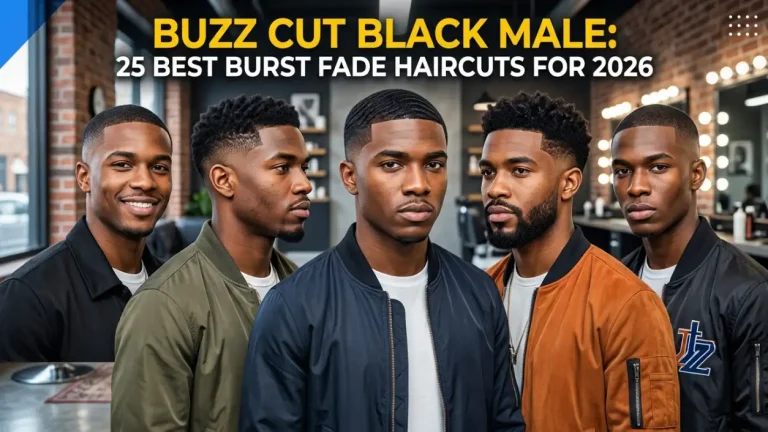
6. Burst Fade Buzz Cut Mullet

The burst fade follows a rounded path around the ear. Instead of creating a mostly horizontal transition, the fade curves backward while preserving more hair in the central rear section. This helps the longer nape stand out.
A buzz cut burst fade mullet is particularly effective when the back has curls or waves because the texture adds volume behind the closely faded sides.
Ideal for: Wavy, curly, and thick hair.
Suggested specifications: #2 or #3 top, curved burst fade, textured nape.
Barber request: “Create a rounded burst fade around each ear and keep the central back section full.”
Daily routine: Apply a little lightweight curl cream or styling lotion to the nape if needed.
Upkeep rhythm: Every two to three weeks.
Avoid: Cutting the curved fade too deeply into the back.
Styles by Top Length
7. # 1 Top Buzz Cut Mullet

A number one guard leaves approximately 3 mm of hair. At this length, the scalp and head shape become more visible. The longer back also appears more dramatic because the contrast is greater.The style can look striking with a neat fade and natural neckline.
Ideal for: People who are comfortable with a very short top.
Suggested specifications: #1 top, short sides, medium or longer back.
Barber request: “Use a number one on top, but keep the back separate and avoid extending that length below the crown.”
Daily routine: Almost none for the cropped area.
Upkeep rhythm: Two to three weeks, depending on your preferred look.
Avoid: Choosing this length without considering scalp visibility or crown irregularities.
If you’ve never had a close buzz, try a longer guard first.
8. #2 Top Buzz Cut Mullet

The number two version is one of the easiest options to understand and request. At approximately 6 mm, the upper hair is clearly buzzed but retains more coverage than a #1. It pairs well with tapers, low fades, and burst fades.
Ideal for: Beginners who already enjoy short hairstyles.
Suggested specifications: #2 top, low or mid fade, visible nape extension.
Barber request: “Give me a number two on top, blend the sides, and preserve the longer back.”
Daily routine: Usually no product needed on top.
Upkeep rhythm: Around two to three weeks for a consistently cropped look.
Avoid: Requesting a #2 across the entire head unless you also explain which rear section must remain longer.
This guard provides a practical starting point for testing different fade designs.
9. Longer Buzz Cut Mullet with Soft Texture (#4 to #6)

Not every cropped mullet needs an extremely short top. Using a #4, #5, or #6 leaves enough hair for some visible movement, particularly with natural waves. The result moves closer to a short textured crop while retaining the longer back.
Ideal for: People who want a softer finish or more upper coverage.
Suggested specifications: #4–#6 top, low taper, layered crown.
Barber request: “Leave enough length on top for natural texture and use a soft transition into the longer back.”
Daily routine: Work a small amount of matte cream or lightweight styling paste through the top.
Upkeep rhythm: Three to five weeks, depending on how much length you can tolerate.
Avoid: Applying thick products that make short hair look flat or greasy.
This choice can also reduce the stark contrast between the scalp and hair in some people with lower density.
Styles by Back Length
10. Short Subtle Nape Buzz Cut Mullet

A short nape creates a restrained mullet shape. Rather than extending toward the shoulders, the hair ends only a little lower than a typical cropped haircut. It works well when you want something distinctive that doesn’t dominate your entire appearance.
Ideal for: First-time wearers and conservative environments.
Suggested specifications: #3 top, low taper, short neckline extension.
Barber request: “Leave a small amount of extra hair at the lower back instead of creating a long tail.”
Daily routine: Wash, dry, and lightly position the back.
Upkeep rhythm: Three to four weeks.
Avoid: Trimming the neckline so high that the extra length disappears.
If you’re uncertain about the haircut, this is a sensible place to start.
11. Neck Length Classic Buzz Cut Mullet
This version preserves enough rear hair to extend down the neck. The longer back becomes more apparent from the side, particularly when paired with a short fade. It offers a recognizable mullet profile without reaching shoulder length.
Ideal for: People who want clear contrast without extreme styling.
Suggested specifications: #2 or #3 top, low fade, nape extending toward the collar.
Barber request: “Keep the back long enough to reach the lower neck and shape it naturally around the edges.”
Daily routine: Comb or finger-style the longer hair.
Upkeep rhythm: Short sections every two to four weeks; rear shaping as needed.
Avoid: Over-thinning the back and leaving uneven ends.
Whether the hair reaches your collar depends on your neck length, growth pattern, and existing hair length.
12. Long Back Buzz Cut Mullet
A long-back version makes the rear section the main feature. The upper hair stays short, while the back extends several inches or more. This creates an unmistakable contrast and allows greater styling variety at the neckline.
Ideal for: People who already have longer rear hair or want a dramatic cut.
Suggested specifications: #2 top, tapered or faded sides, extended back.
Barber request: “Keep the upper head closely cropped but retain the long hair at the back, including enough length near the crown for the shape to work.”
Daily routine: Use conditioner and detangle the longer section gently.
Upkeep rhythm: Maintain the short areas regularly; trim the back when necessary.
Avoid: Cutting a sudden, unwanted shelf between the upper crown and the long rear hair.
Growing this style from a uniform buzz requires patience. The back cannot become long overnight.
Styles by Hair Type
13. Wavy Buzz Cut Mullet
Naturally wavy hair introduces movement without much styling.The clipped top looks controlled, while the nape develops a softer outline as the waves grow. A low taper usually preserves enough side weight for a balanced shape.
Ideal for: Loose waves and medium-density hair.
Suggested specifications: #3–#5 top, gentle fade or taper, longer wavy nape.
Barber request: “Keep the natural wave pattern visible toward the back rather than cutting everything into a straight outline.”
Daily routine: Use a light mousse or leave-in product and allow the back to air-dry.
Upkeep rhythm: Approximately three to four weeks for the short sections.
Avoid: Excessive thinning that causes the waves to lose their natural shape.
14. Curly Buzz Cut Mullet
Curly hair creates a different silhouette from straight hair. The top may look compact, while the longer back springs outward. This can produce a rounded shape with noticeable texture.The key challenge is shrinkage. Hair that looks long when stretched may appear much shorter in its natural curled state.
Ideal for: Defined curls and naturally voluminous hair.
Suggested specifications: #3 or #4 top, controlled fade, longer curled rear section.
Barber request: “Please assess the back length with my curls in their normal position before removing much hair.”
Daily routine: Apply a suitable curl cream and gently shape the curls.
Upkeep rhythm: Around three to four weeks for the fade or short sections.
Avoid: Cutting the back based only on stretched length.
A diffuser on low heat can help shape curls if air-drying doesn’t give the result you want.
15. Coily Buzz Cut Mullet
Coily hair can give the mullet a compact but full-looking rear shape. Because tight coils shrink considerably, visual length may differ from stretched length. A barber familiar with textured hair can account for density, shrinkage, and the direction of natural growth.
Ideal for: Tight curls, coils, and afro-textured hair.
Suggested specifications: #3 top or a longer shaped crop, low fade, carefully preserved nape.
Barber request: “Shape the back around my natural coil pattern and leave enough length for shrinkage.”
Daily routine: Use a moisturizing leave-in product and detangle gently when needed.
Upkeep rhythm: Shape the short sides every two to four weeks; assess the nape separately.
Avoid: Aggressive dry brushing or uneven cutting of stretched coils.
Keeping the rear section conditioned can help reduce tangling and breakage.
Special Style
16. Disconnected Two Block Buzz Cut Mullet
A disconnected mullet uses a clear separation between short and long sections. Rather than gradually blending the upper hair into the back, the barber creates a visible transition. The result looks more graphic and structured.
Ideal for: People who prefer bold, deliberately unconventional haircuts.
Suggested specifications: #2 top, short sides, longer separated rear section.
Barber request: “Create a deliberate difference between the cropped upper section and the longer back, with a clean transition line.”
Daily routine: Keep the longer hair positioned so the contrast remains visible.
Upkeep rhythm: Around two to three weeks for the cropped sections.
Avoid: Leaving an accidental uneven step that looks unfinished rather than intentional.
A clear reference photo is especially important for this style because disconnected cuts can vary considerably.
Which One Suits You?
Choosing the right style involves more than picking the best-looking photo. Consider your hair texture, face proportions, hairline, and how much maintenance you’re willing to manage.
A Three-Choice Framework for Selecting Your Cut
Use this simple method before booking an appointment.
Use this simple method before booking an appointment.
- Minimal visibility: Start around #3–#5.
- Clearly cropped: Consider #2.
- Very close-cut: Consider #1 or a shorter finish.
Choice 2: Choose the side profile.
- Soft and understated: Taper.
- Neat with moderate contrast: Low fade.
- Sharper outline: Mid fade.
- Bold contrast: High or skin fade.
- Curved around the ears: Burst fade.
Choice 3: Decide how obvious the mullet should be.
- Subtle: Small neckline extension.
- Noticeable: Back reaching toward the collar.
- Dramatic: Several inches of longer rear hair.
For example, a first-time wearer might choose a #3 top, low taper, and short nape. Someone who wants a stronger look could choose a #2 top, burst fade, and longer textured back.
Face Shape, Head Shape & Hairline Guide
| our features | What to consider | Useful starting option |
|---|---|---|
| Round face | More visible upper shape with less side bulk may create a longer-looking outline | Mid fade with moderate top length |
| Square face | A softer side transition can balance an angular jaw | Low taper with textured back |
| Oval face | Many combinations can work; focus on hair texture | #2 or #3 with preferred fade |
| Long face | Retaining side fullness may avoid making the outline look even longer | Low fade or taper |
| Heart-shaped face | Slightly more upper and rear fullness may create balance | #4 top with soft nape |
| Receding hairline | Very short top hair may make the hairline more noticeable | Try #3–#5 before going shorter |
| Prominent crown swirl | Extra crown length may make the transition easier to control | #4 top with shaped crown |
| Uneven head shape | A longer guard can reduce how much scalp contour shows | #3–#5 top |
These are visual guidelines, not strict rules. Individual proportions, density, and styling preferences matter more than a face-shape label. If your hairline is changing, the shorter upper section won’t conceal it completely. Ask your barber to assess coverage before choosing a very low guard.
Who Should and Shouldn’t Choose This Haircut?
Consider this haircut if you:
- Prefer a cropped hairstyle with a distinctive shape.
- Want to experiment with fades while keeping some length.
- Enjoy a low-effort daily routine on the upper sections.
- Are comfortable maintaining different lengths.
- Want to preserve naturally wavy, curly, or coily texture at the back.
Consider another style, or start with a subtle version, if you:
- Need an entirely uniform haircut for work or school.
- Dislike frequent fade maintenance.
- Want no visible length at the neckline.
- Prefer a fully blended haircut without contrast.
- Have an irritated or sensitive scalp that may react to very close trimming.
For beginners, the most forgiving combination is generally a longer upper guard, low taper, and shorter nape. More experienced wearers may prefer a skin fade or a disconnected shape because they already understand how their hair behaves at different lengths.
Professional, Age & Gender Variations
A mullet doesn’t have to look the same on everyone.
Teenagers: A subtle nape with a low taper may be more compatible with school grooming policies. Check the rules before choosing a dramatic fade or long back.
Young adults: Mid fades, burst fades, and textured backs offer more noticeable styling options.
Professionals: A #3 or #4 top, neat taper, and short rear extension can create a restrained appearance. Suitability still depends on workplace expectations.
Mature adults: A softer transition and careful hair-density assessment may feel more balanced than an exposed skin fade.
Women and gender-neutral styles: The same cropped-top and longer-back structure works regardless of gender. Adjust the neckline, length, and side shape to personal preference rather than relying on gender-specific cutting rules.
The overall silhouette matters more than the label used to describe the haircut.
What to Tell Your Barber
A haircut name alone isn’t enough to explain the result you’re picturing. Two people asking for the same style may expect completely different lengths. Your barber needs to understand the upper guard, fade placement, crown transition, and nape length.
Copy and Paste Script
“I want a short mullet with a number three guard on top and a low taper around the sides. Please keep the back longer than the upper sections and preserve enough hair around the crown for a natural transition. I’d prefer a neat outline without cutting the neckline too high. Can we check the back length before you trim it?”
For a more dramatic version, replace “low taper” with “burst fade” and specify how much hair should remain at the nape.
10 Point Checklist
Before the clippers touch your hair, confirm the following:
- Top guard number or approximate length
- Uniform sides, taper, or fade
- Low, mid, or high fade placement
- Skin-close or slightly longer fade base
- Crown blending or deliberate disconnection
- Desired nape length
- Natural, rounded, or squared neckline
- Treatment of sideburns
- Front hairline shape
- Reference photos showing your preferred result
If you’re unsure about the fade height, ask the barber to explain where the shortest section will begin and end.
Typical Haircut Cost and Appointment Time
The price depends on your location, barber, existing length, and how detailed the fade needs to be. US industry reporting for 2026 places the average men’s haircut around $43, but individual shop prices vary widely. This is a general haircut benchmark, not a separate verified national price for this exact style.
| Service | Planning time | What affects difficulty |
|---|---|---|
| Simple cropped mullet | 20–35 minutes | Basic sectioning and short sides |
| Low taper version | 25–45 minutes | Precision around the ears |
| Detailed burst fade | 35–60 minutes | Symmetry and curved blending |
| Long-back restyling | 40–70 minutes | Shaping existing length |
| Short fade refresh | 15–30 minutes | Amount of regrowth and detail |
Times are practical planning estimates, not measured industry averages. Confirm the appointment length with your barber. Ask whether the advertised price includes a fade, wash, styling, or neckline shaping. If you’re comparing shops, request a quote for the complete haircut rather than a standard buzz cut.
How to Do It at Home (Safely)
Mullet cutting at home is possible, but the difficulty depends on the style. A simple version with uniform sides is more manageable than a precise burst fade or skin fade. The biggest risk is cutting too far into the back. Once the longer section has been removed, it must grow back before you can restore the intended shape.
Basic tools:
- Hair clippers with suitable guards
- Comb and sectioning clips
- Large mirror and hand mirror
- Towel or cutting cape
- Small trimmer for careful edge work
Always use clean, functioning tools.
The “Start Longer” Rule
Begin with a guard that leaves more hair than your final target length. For example, if you think you want a #2 on top, make the first pass with #4. Check the shape before shortening it. This is especially important around the crown, where an overly high cutting line can leave a visible gap between the cropped upper hair and longer nape.
Step by Step
Step 1: Prepare your hair. Start with clean, dry, detangled hair so the guard can move evenly. If you have tightly curled hair, account for shrinkage before selecting the final length.
Step 2: Mark the rear section. Use a comb and clips to separate the hair you intend to preserve at the back.Make the boundary visible from both sides.
Step 3: Cut the top conservatively. Attach a longer guard and work gradually across the upper head. Use controlled passes rather than pressing the clipper heavily against the scalp.
Step 4: Shorten the sides. Choose a suitable guard for a simple even finish. If you want an advanced fade, consider leaving this part to a professional.
Step 5: Assess the crown. Use two mirrors to inspect the transition between the upper hair and nape. Avoid blindly cutting downward.
Step 6: Check symmetry. Compare the height of both side sections and the amount of hair remaining behind each ear.
Step 7: Clean visible edges carefully. Remove only stray hairs that clearly sit outside your desired outline.
Don’t reshape the entire neckline without checking the rear view.
Step 8: Make small final adjustments. After drying or settling the hair into its natural position, inspect all angles again. Stop if you cannot clearly see where the clipper blade is moving.
What Not to Do
Don’t attempt an aggressive skin fade during your first home haircut. Avoid rushing the back of the head, forcing clippers through tangles, or cutting the nape without checking the mirror. Never use damaged guards or blades that pull hair. If your scalp has open cuts, significant irritation, or signs of infection, avoid shaving over the affected area and seek appropriate medical advice.
Styling by Hair Type
The cropped upper section usually needs little daily work. Most of your styling effort will go into the longer back.
| Hair type | Simple daily approach | Useful product category |
|---|---|---|
| Straight | Dry gently and comb the nape into position | Lightweight matte paste |
| Wavy | Apply product while slightly damp and allow natural drying | Light mousse or styling cream |
| Curly | Condition, scrunch gently, and air-dry | Curl cream or leave-in conditioner |
| Coily | Moisturize and detangle carefully in sections | Moisturizing leave-in conditioner |
| Fine | Use little product and avoid coating the roots | Lightweight texture product |
| Thick | Control bulk and shape without excessive hold | Styling cream or soft-hold paste |
Product quantity matters. Begin with a small amount, distribute it through your hands, and apply it mainly where needed. A heavy wax can make short hair appear shiny or flattened. Too much mousse may leave longer strands stiff.
Troubleshooting Styling Problems
The nape sticks outward: Check whether the hair is simply too short to fall downward. A light styling cream may help, but extra growth or reshaping may be needed.
The crown looks bulky: Ask your barber to adjust the transition rather than shortening the entire back.
The fade looks uneven: Don’t repeatedly chase the higher side with clippers. A barber can assess whether the difference needs blending or regrowth.
Curly hair appears shorter than expected: Allow it to return to its normal curl pattern before deciding whether more cutting is necessary.
The top looks patchy: This may be related to hair growth direction, density, or an uneven clipper pass. A longer guard can sometimes make the appearance softer.
The longer section feels dry: Review your cleansing and conditioning routine instead of simply adding more styling wax.
Maintenance & Grow Out Timeline
This haircut changes shape as the top, sides, and back grow. Keeping it sharp doesn’t mean trimming every section at every appointment. In fact, preserving the nape is essential if you’re trying to grow a longer mullet.
This haircut changes shape as the top, sides, and back grow. Keeping it sharp doesn’t mean trimming every section at every appointment. In fact, preserving the nape is essential if you’re trying to grow a longer mullet.
| Period | Typical visual change | Suggested action |
|---|---|---|
| Week 1 | Fresh edges and defined contrast | Maintain normal hair care |
| Weeks 2–3 | Fade begins to soften | Consider an edge or fade refresh |
| Weeks 4–5 | Upper hair looks fuller | Reassess guard length and side shape |
| Weeks 6–8 | Crown transition may need adjustment | Book a shaping appointment |
| Months 3–4 | Back becomes more noticeable | Preserve useful rear length |
| Month 6 onward | More styling options may become possible | Decide whether to maintain or extend the nape |
These are approximate milestones. Hair growth varies between individuals, and curly hair may appear to grow more slowly because of shrinkage.
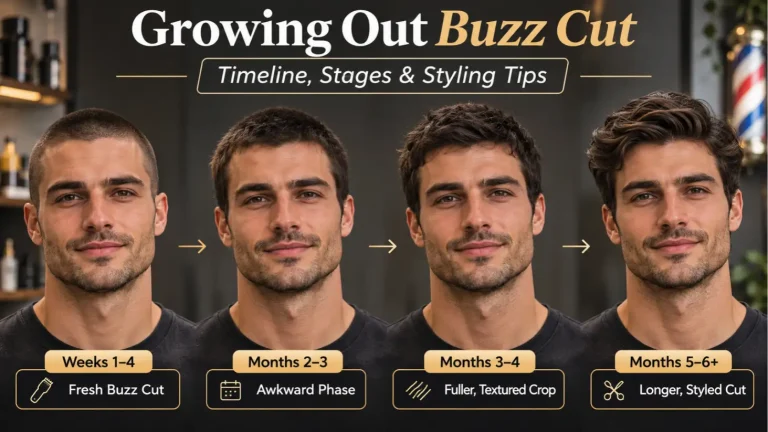
Growing a Buzz Cut Into a Mullet
Start by leaving the rear hair alone while maintaining the front and sides. Tell your barber that growing the neckline is your goal. You may need several visits before the difference becomes obvious.
Human scalp hair commonly grows around half an inch, or approximately 1.25 cm, per month. That means gaining around 3 inches of additional length may take roughly six months, although your actual result can differ. During the awkward middle stage, the crown may feel bulky. Instead of cutting it short, ask for careful shaping that protects the length needed to connect the hairstyle.
Scalp Care
Very short hair leaves some areas of the scalp more exposed. Use gentle shampoo according to your hair and scalp needs. Avoid aggressive scratching or repeatedly passing clippers over irritated skin. When outdoors, protect exposed scalp with suitable sun protection. Broad-spectrum, water-resistant SPF 30 or higher is a standard dermatology recommendation, and a hat can provide additional coverage. If you have curly or coily hair, use moisturizing products as needed and avoid rough detangling.
Common Mistakes
Even a small haircutting decision can change the final silhouette.
1. Choosing the fade before deciding on back length: The fade must work with the nape. Decide how much rear hair you want to preserve first.
2. Removing too much hair around the crown: This can interrupt the shape and produce an unwanted separation.
3. Picking a guard without seeing a real example: A #1 looks dramatically shorter than a #4. Ask your barber to demonstrate the difference.
4. Over-cleaning the neckline: Regularly shaving the growing rear hair can prevent the mullet from developing.
5. Ignoring natural hair texture: Straight hair falls differently from curly and coily hair.
6. Expecting a fresh fade to stay unchanged for weeks: Very short transitions become less defined as hair grows.
7. Using heavy products on short hair: Too much product can make the upper section appear flat or oily.
8. Copying a reference photo without adjusting for density:Your final result depends on your own hair characteristics.
9. Attempting a complicated fade without experience: A simple home trim is different from a symmetrical, curved burst fade.
10. Forgetting the side and rear views:A flattering front profile doesn’t automatically mean the back is well shaped.
Frequently Asked Questions
Conclusion
A buzz cut mullet gives you more styling choices than a conventional short haircut without requiring a complicated daily routine. The key is finding the right balance between the clipped upper section, side treatment, and longer back.
For beginners, a #3 top with a gentle taper and subtle neckline extension is a sensible starting combination. If you prefer stronger contrast, consider a #2 top with a mid fade or curved burst fade.
Your hair texture, crown shape, lifestyle, and maintenance preferences should guide the final decision. You don’t need the longest nape or the shortest guard to make the haircut look intentional. A well-planned shape matters more than an extreme length difference.
Next step: Choose your favorite style from the 16 examples, save front and rear reference photos, and show your barber the exact guard and fade combination you want.
BuzzCutHub Editorial
BuzzCutHub publishes practical guides on men’s buzz cut hairstyles, modern fades, clipper guard sizes, and haircut maintenance.
Our content is designed to help readers understand different buzz cut variations, compare haircut lengths, and communicate their preferred styles to a barber. We aim to provide clear, accessible, and useful grooming information.